21 Haircuts for Plus Size Women with Round Faces That Are Incredibly Flattering
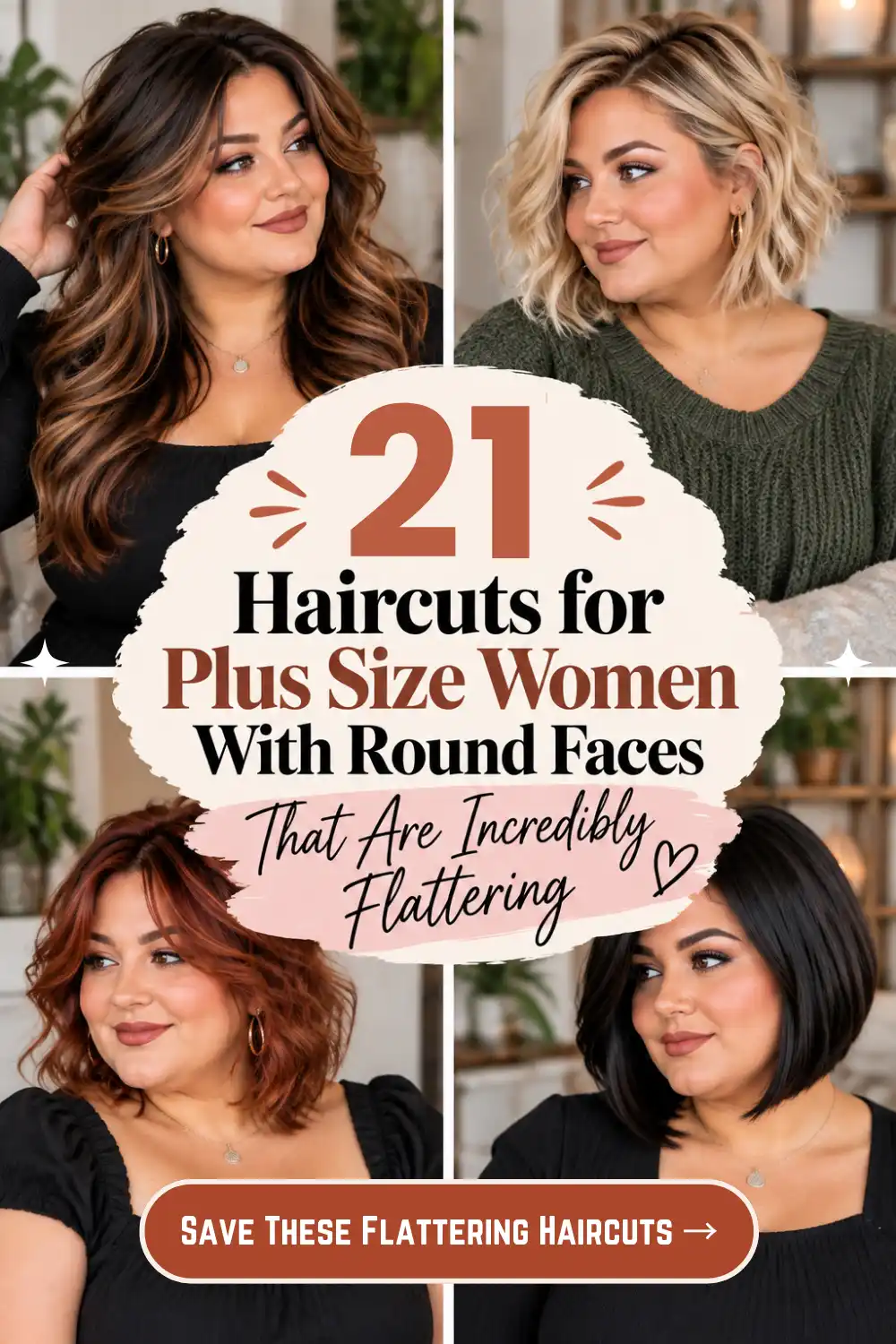
Finding a haircut that makes you feel instantly polished can be surprisingly personal, especially when you have a round face and want a style that works beautifully with your natural curves. The right cut is not about hiding your face or changing the way you look. It is about creating movement, adding flattering angles, and choosing proportions that make your features feel balanced.
The most flattering haircuts for plus size women with round faces often create visual length without looking severe. Face-framing layers, angled ends, side-swept bangs, strategic volume, and softly tapered shapes can all make a difference. If you’re deciding which length suits you best, exploring these medium-length haircut options can also help you compare different silhouettes before committing.
From sleek modern bobs to playful pixies and long cascading layers, there are plenty of ways to create a haircut that feels stylish and wearable. These 21 ideas are worth saving if you are ready for a fresh makeover that works with your features rather than against them.
1. Long Face-Framing Layers
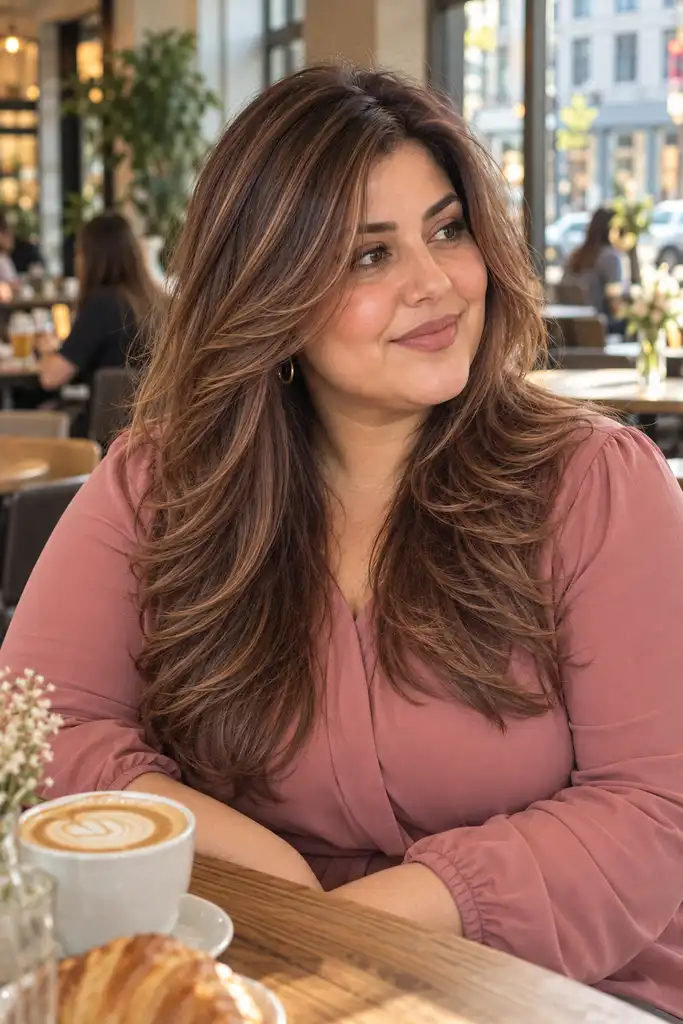
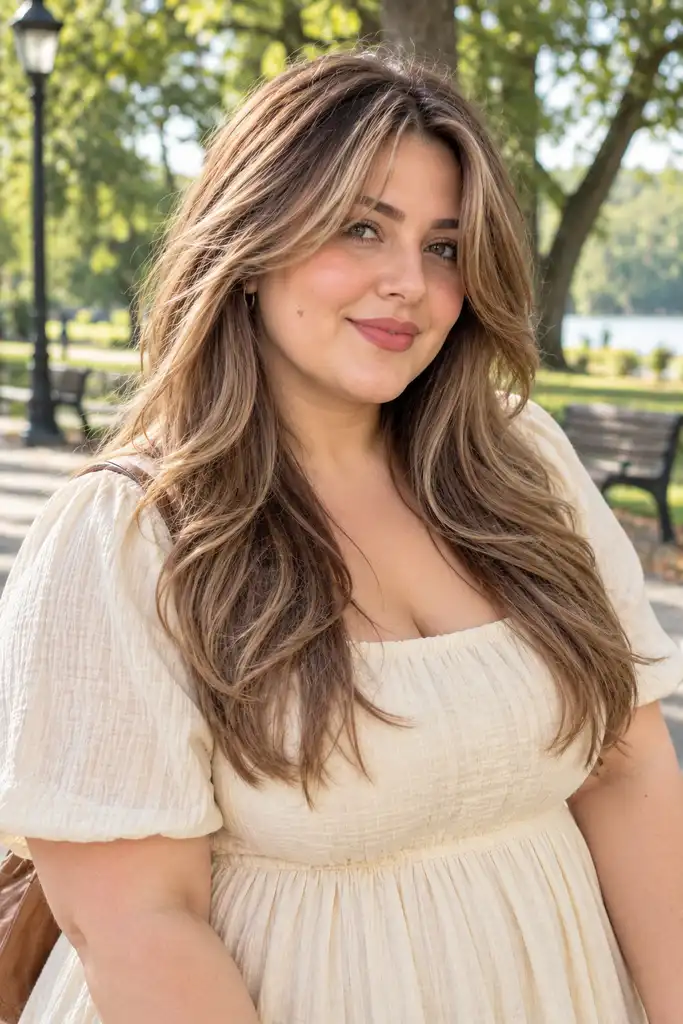
Long face-framing layers are one of the easiest choices when you want to complement a round face without sacrificing length. The key is where the shortest layers begin. Layers that start below the cheekbones and continue toward the jaw create a gentle vertical line rather than adding width directly across the cheeks.
This shape works beautifully on straight, wavy, and softly curled hair. Thick hair may benefit from internal weight removal, while finer hair usually looks better with fewer, carefully placed layers. For a polished finish, use a round brush to direct the front pieces slightly away from the face.
2. Angled Bob
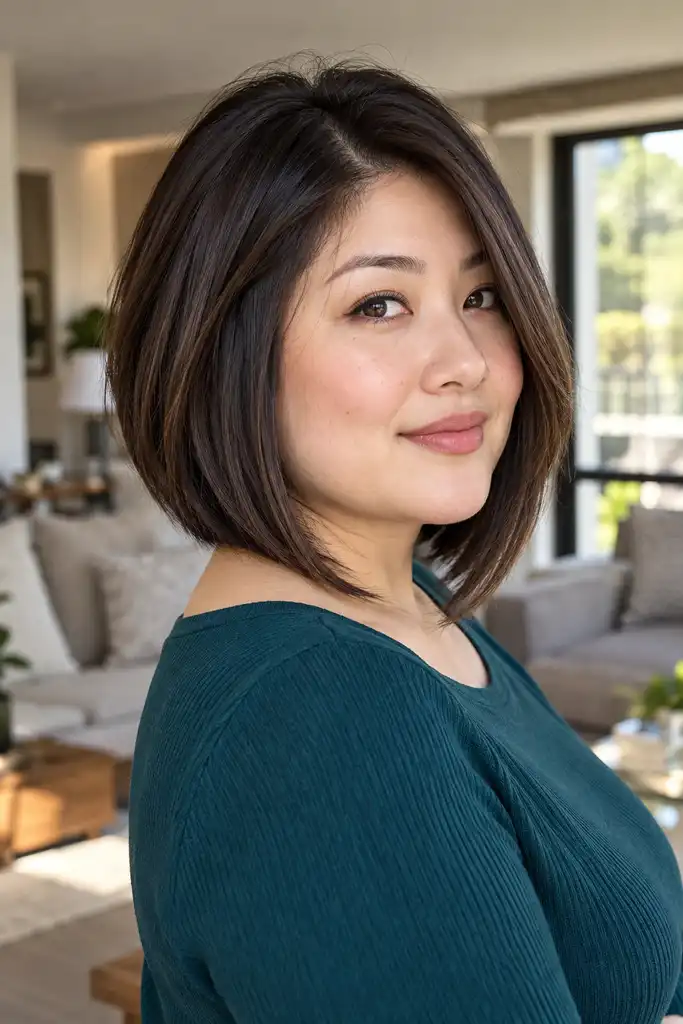
An angled bob brings instant structure to a round face because the front is longer than the back. That difference creates diagonal lines that guide the eye downward instead of emphasizing facial width.
A slightly longer front that reaches the jaw or falls just below it is often easier to wear than an extremely short bob. A deep side part can add even more asymmetry. Keep the ends relatively smooth rather than curling them heavily inward, since too much volume at cheek level can make the face appear wider.
3. Long Layered Haircut
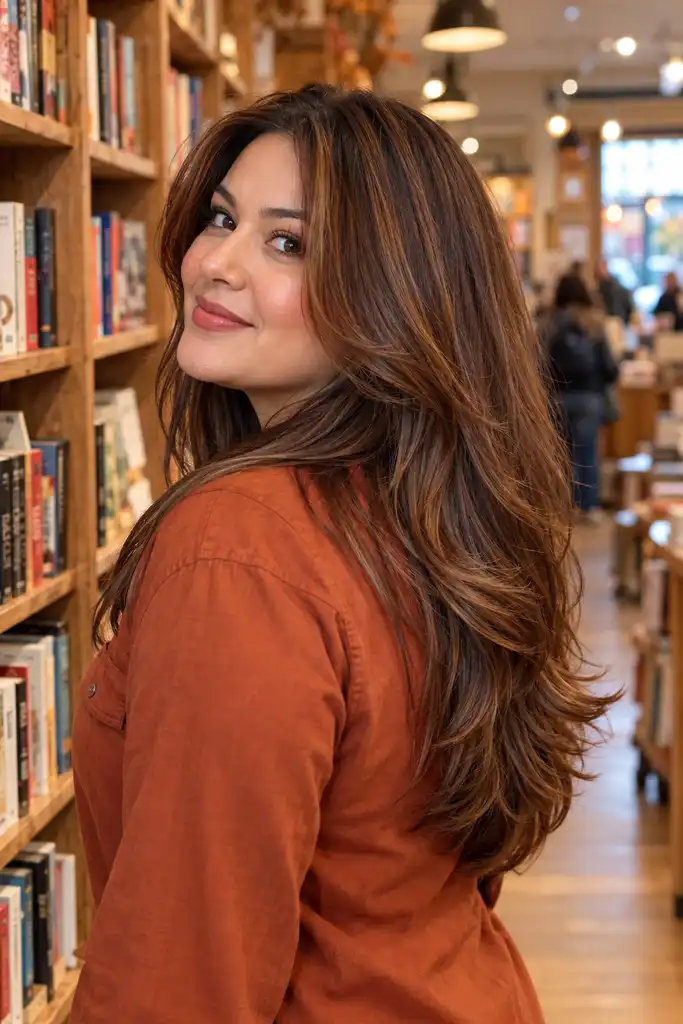
Long layered hair gives you movement without forcing you into a short style. It is especially useful if you want to create a longer-looking silhouette while keeping enough length for ponytails, braids, and loose waves.
Instead of placing heavy layers around the cheeks, keep the upper section controlled and introduce longer layers through the mid-lengths and ends. This creates a cascading effect that draws attention vertically. A subtle blowout with the front pieces turned away from the face gives this haircut an elegant finish.
4. Side-Swept Bangs
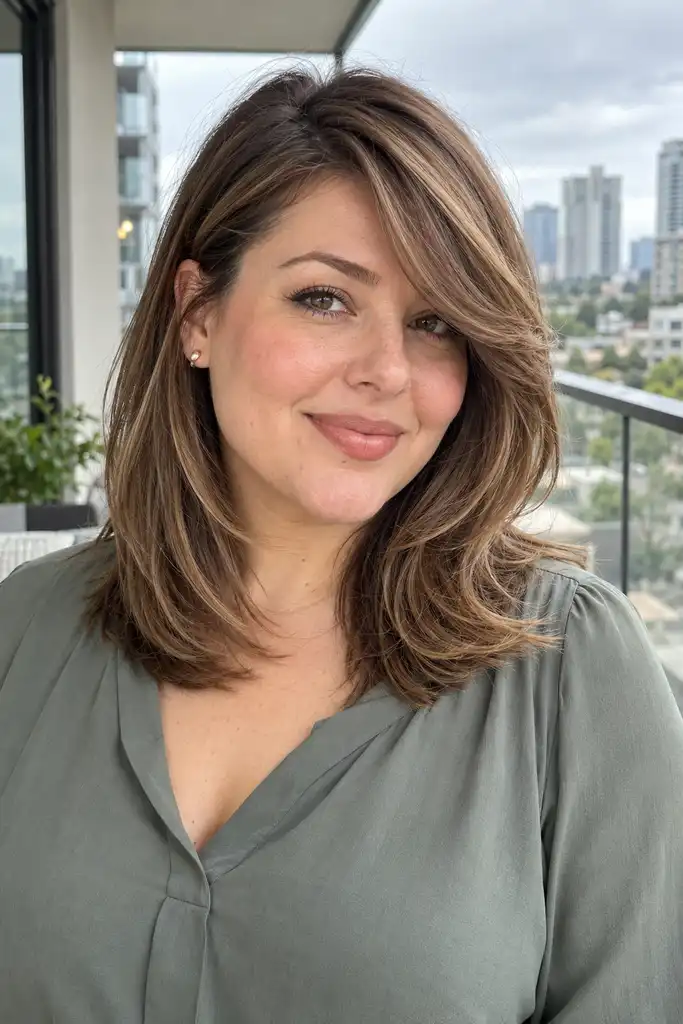
Side-swept bangs can change the way a round face is framed without requiring a dramatic haircut. Rather than creating a straight horizontal line across the forehead, they introduce a diagonal shape that visually breaks up facial roundness.
The most versatile version is long enough to blend into the surrounding layers. You can sweep it dramatically across the forehead or brush it away for a more open look. If your roots become oily quickly, remember that bangs usually need more frequent refreshing than the rest of the haircut. A little lightweight dry shampoo can help maintain volume without making the fringe stiff.
5. Shoulder-Length Layered Cut
A shoulder-length layered cut hits a sweet spot between short and long hair. It provides enough length for vertical movement while remaining manageable and light. For a round face, the layers tend to work best when they begin around or below the jaw instead of directly beside the cheeks. This prevents the haircut from creating a rounded frame around the face.
The length also gives you plenty of styling options. You can wear it straight, create soft waves, pull it into a ponytail, or try a half-up style when you want something different.
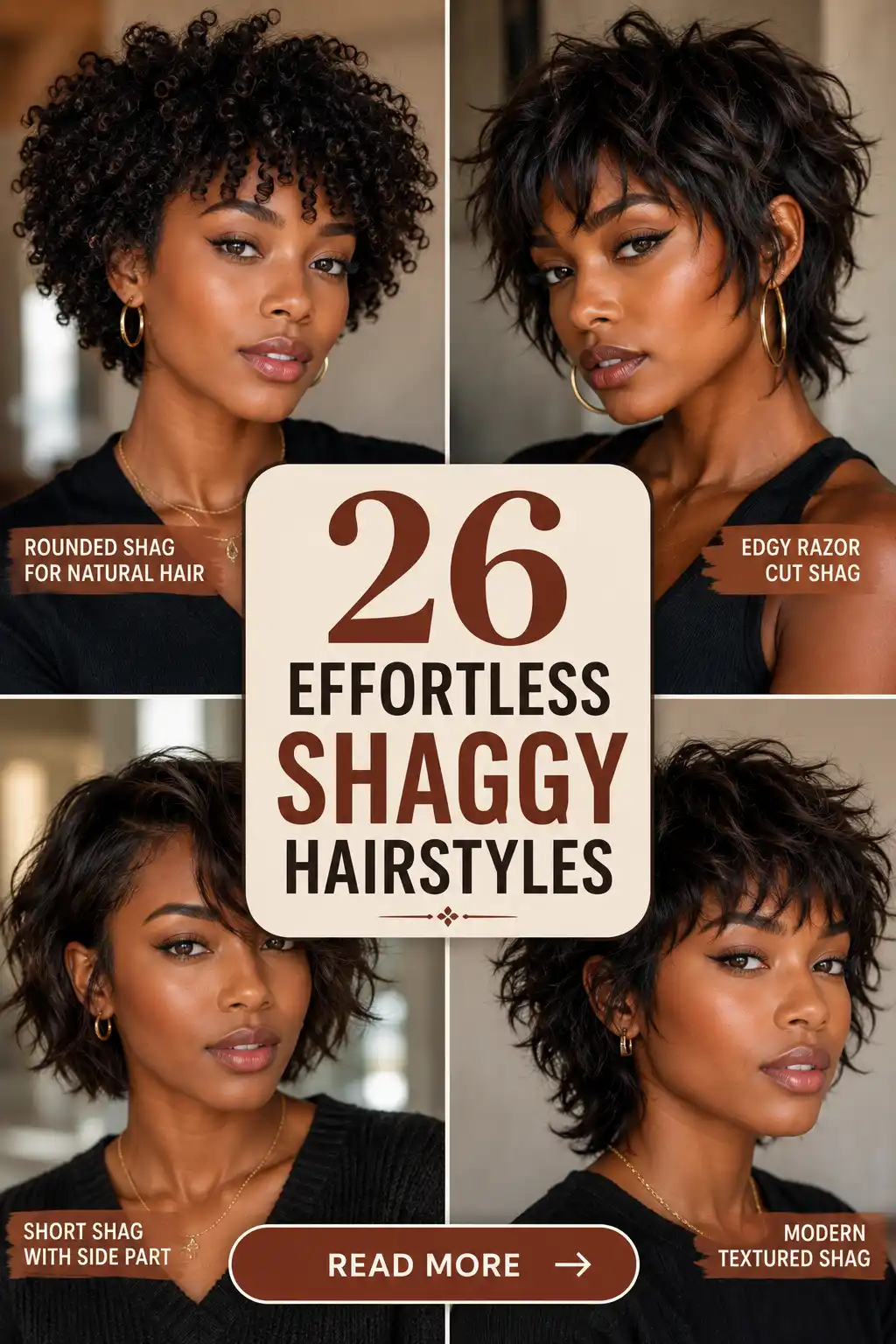
6. Soft Shag
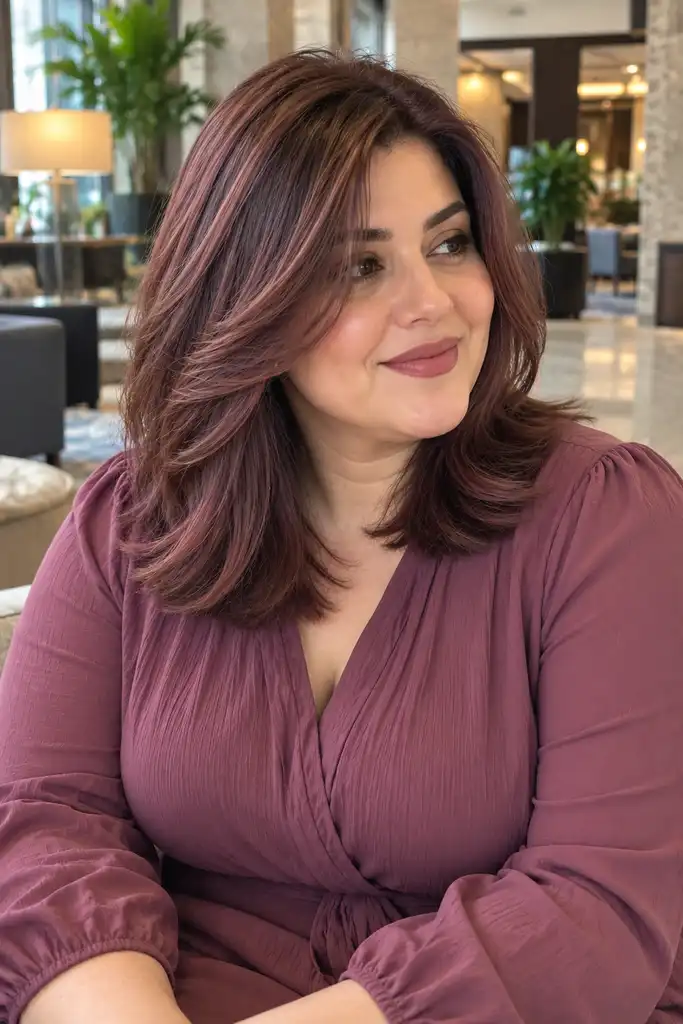
A soft shag is a great choice when you want texture and personality without the heavily chopped appearance of an extreme shag. Blended layers create movement while keeping the sides controlled.
This style is particularly attractive on naturally wavy hair because it works with the existing texture rather than fighting it. Ask your stylist to customize the layering according to your density. Too many short layers can create unwanted bulk in very thick hair. If you love this relaxed aesthetic, browsing more shaggy haircut inspiration can help you compare softer and more textured versions before choosing your shape.
7. Long Curtain Bangs
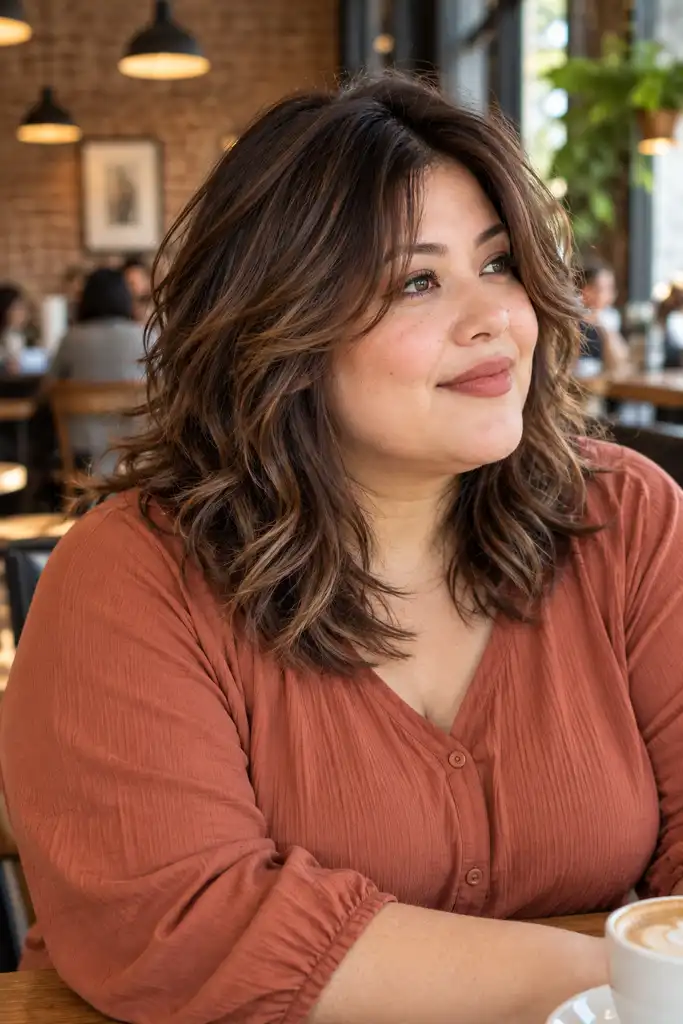
Long curtain bangs frame the face from both sides while leaving the center of the forehead open. That open space can create the impression of length, while the longer outer pieces add soft vertical lines beside the face.
They work especially well with long layers because the fringe can blend naturally into the rest of the haircut. The length can also be customized around your cheekbones and jawline. If you have fine hair, avoid making the curtain section too thick. Taking too much hair from the front can make the rest of the haircut appear thinner. A medium round brush is usually enough to shape the bangs away from the face.
8.
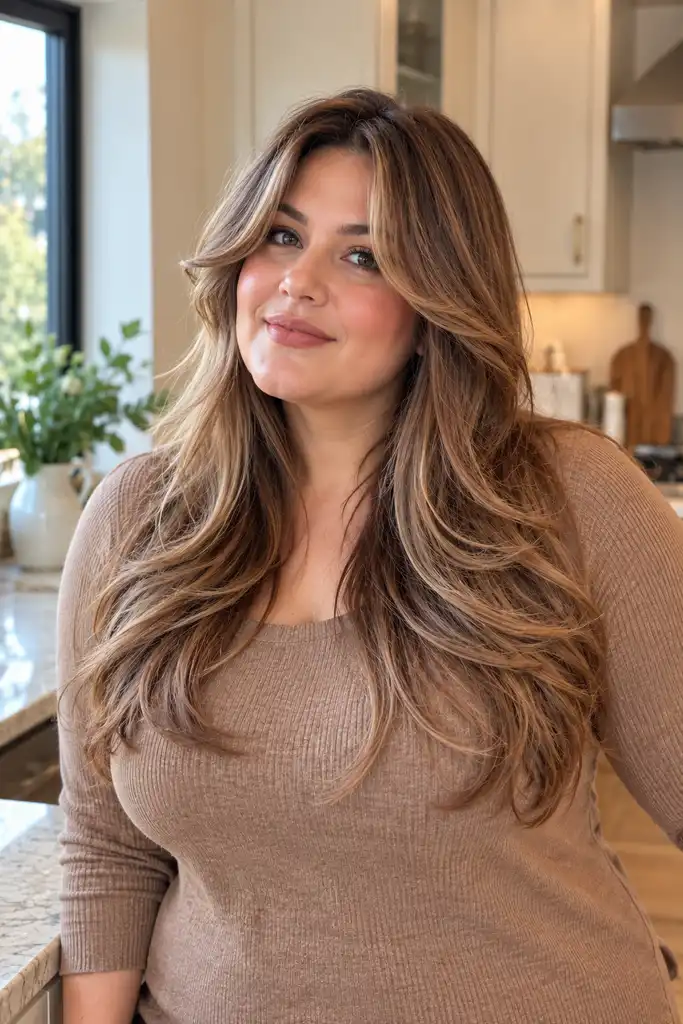
The collarbone lob combines the structure of a bob with the versatility of longer hair. Because it finishes near the collarbone rather than directly at the chin, it creates a longer visual line around the neck and face.
That extra length is useful for round faces because it avoids placing the strongest horizontal line at the widest part of the cheeks. A slightly longer front can make the effect even more noticeable. The lob looks sophisticated when sleek but can easily be softened with loose waves. For everyday styling, part the hair slightly off-center and bend only the mid-lengths while leaving the ends relaxed.
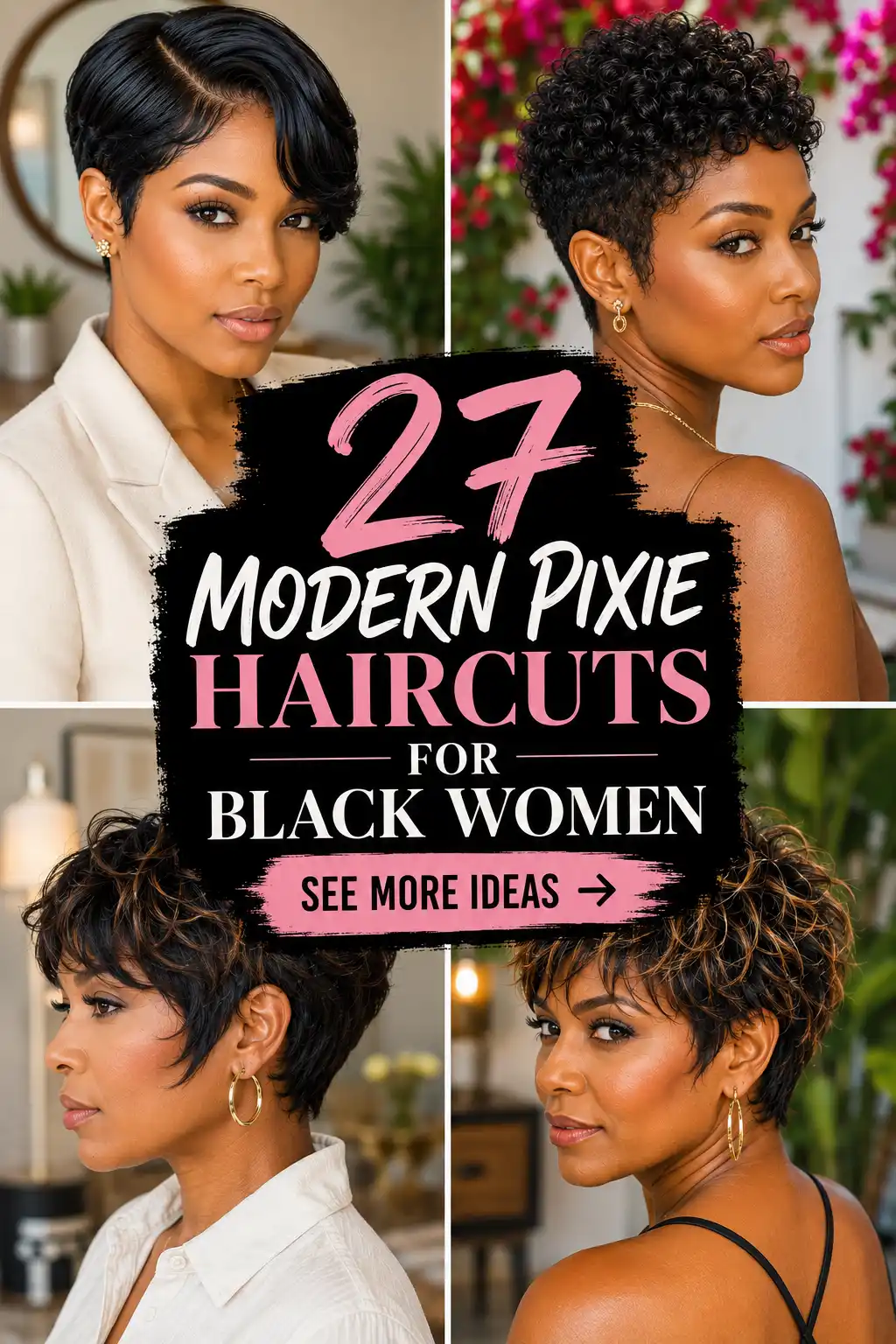
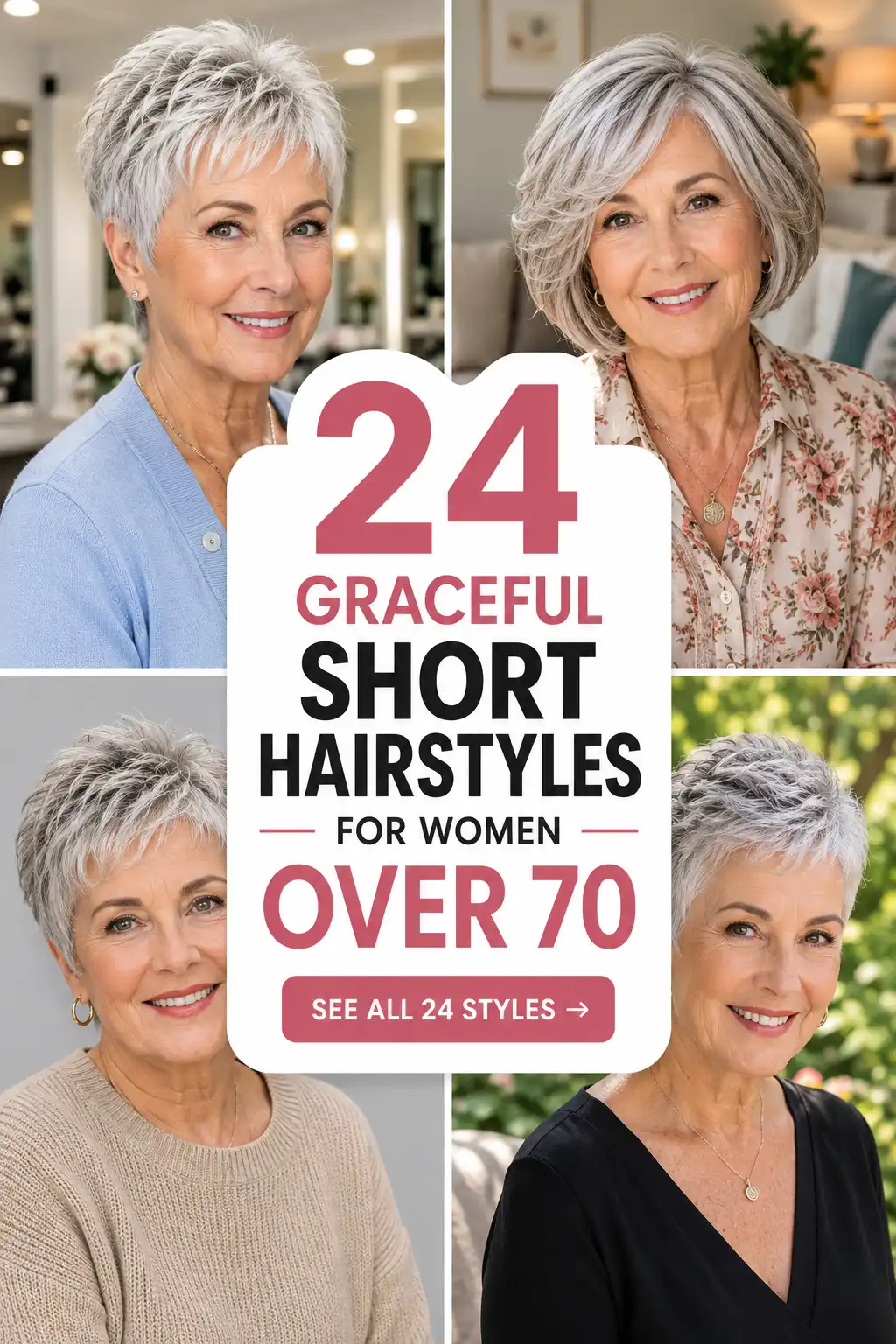
9. Textured Pixie Cut
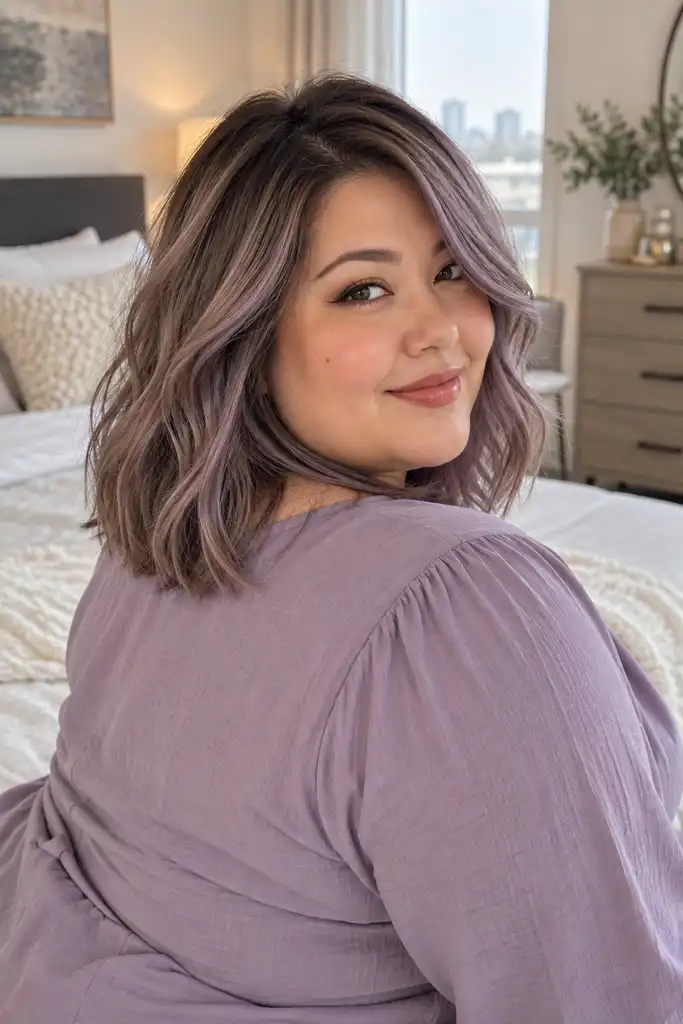
A textured pixie can be surprisingly flattering on a round face when the shape is designed around height and direction. The goal is to keep the sides relatively controlled while creating movement through the crown.
A longer, pieces top gives you several styling options. You can sweep it sideways, push it slightly upward, or create a tousled finish. A pixie does require regular trims because even small amounts of growth can change the silhouette. If you are considering this kind of dramatic change, you can also compare different pixie cuts for plus size women before deciding how short you want to go.
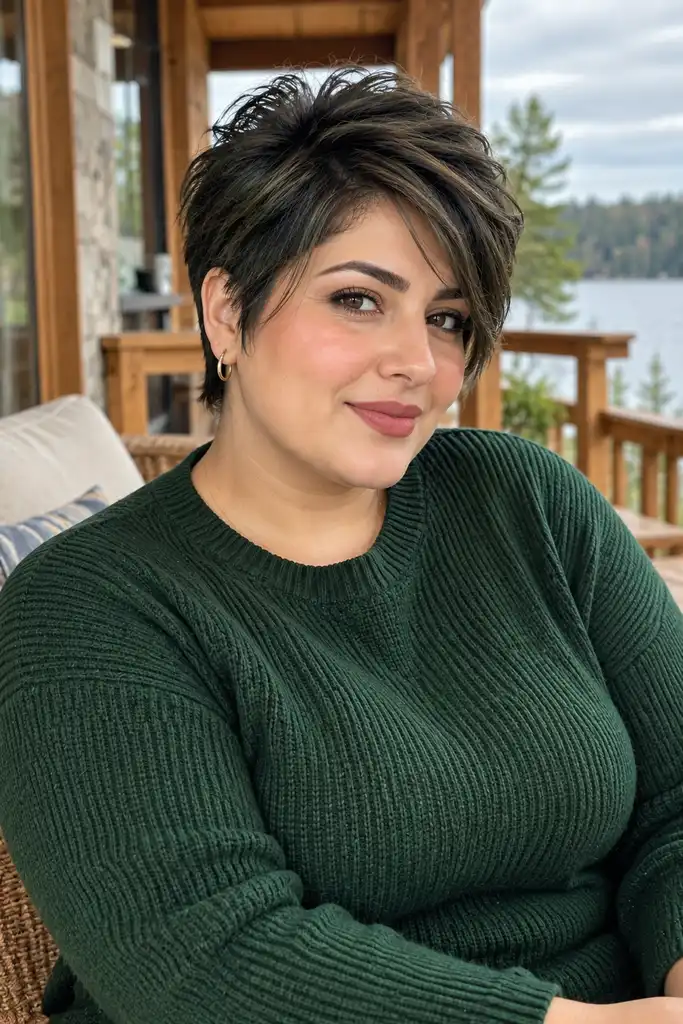
10. Choppy Shoulder-Length Cut
A choppy shoulder-length haircut adds personality while keeping enough length to complement a fuller face. The important distinction is that the choppiness should create movement rather than width.
Longer pieces around the face can be directed away from the cheeks, while lightly textured ends keep the silhouette from feeling heavy. This style is particularly good if you prefer an undone, modern aesthetic.Very thick hair may need internal weight removal so the layers do not expand outward. A small amount of texturizing spray through the ends can bring out the piecey finish without making the hair look overly styled.
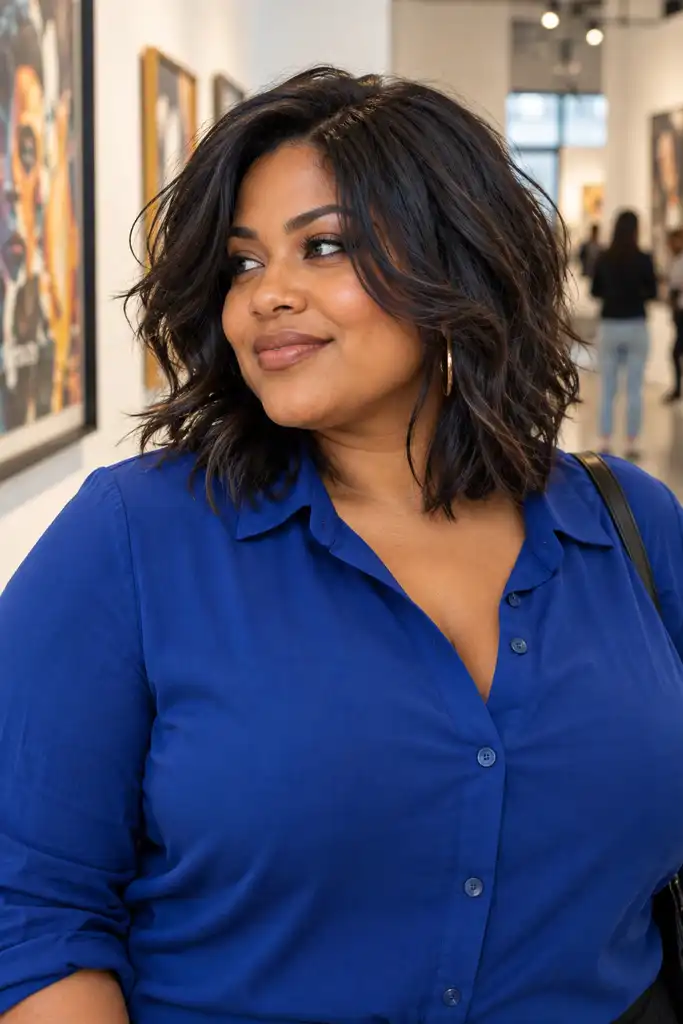
11. Asymmetrical Bob
An asymmetrical bob uses uneven lengths to introduce visual interest and break up facial symmetry. One side can fall slightly longer than the other, creating a diagonal line that makes the haircut feel contemporary. The difference does not need to be dramatic. Even a subtle asymmetry can change the overall impression.
This haircut is particularly striking on straight or lightly wavy hair because the uneven perimeter remains visible. A side part naturally reinforces the shape. If you have curly hair, the concept can still work, but your stylist should account for curl shrinkage before deciding the final lengths.
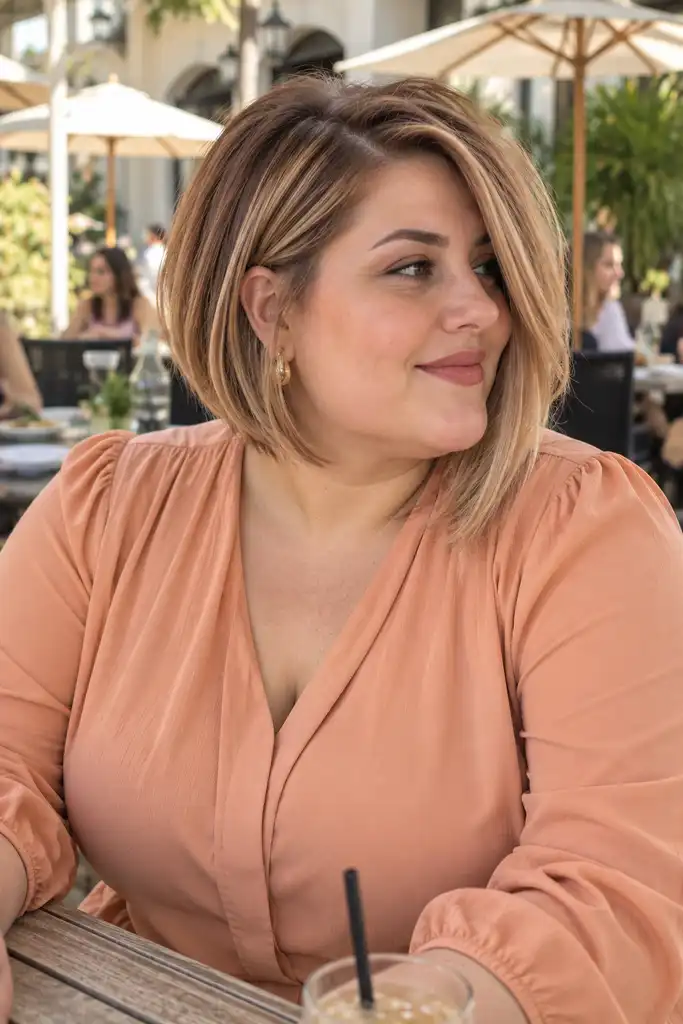
12. Face-Framing Butterfly Layers
Butterfly-style layering is ideal when you want noticeable movement while preserving plenty of length. Shorter layers around the upper face create a feathered frame, while the longer lower layers maintain the dramatic length. For a round face, those shorter layers should sweep outward and downward rather than creating a wide, rounded shape directly beside the cheeks.
This haircut is especially appealing for thick hair because strategic layering can release excess weight while keeping the overall length. If you want to see how this shape can look at different lengths, these butterfly haircut ideas offer another useful source of inspiration.
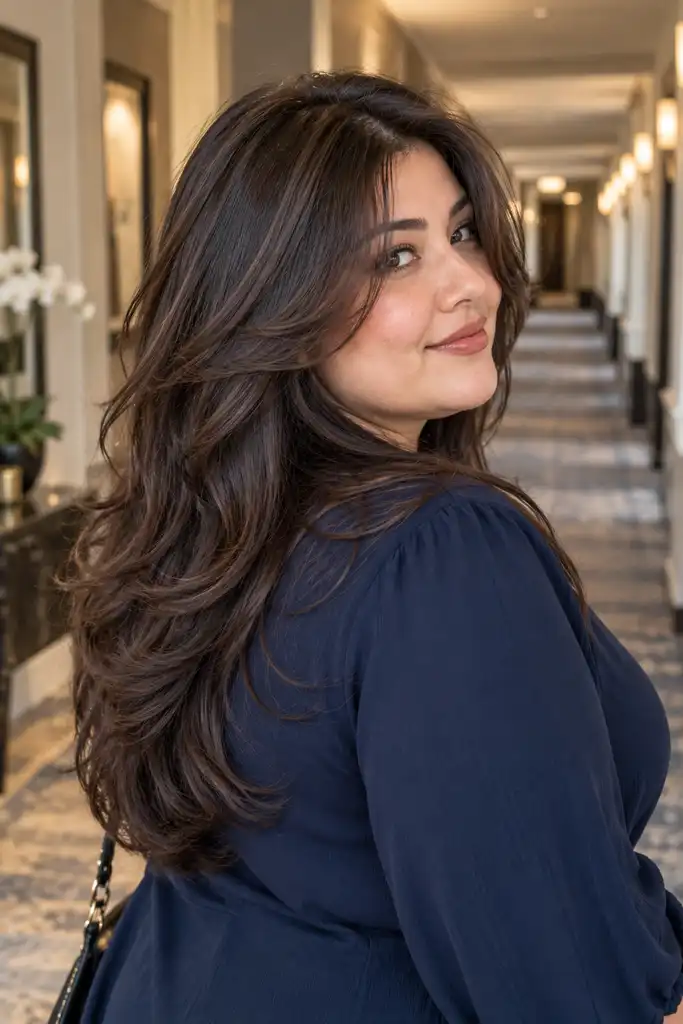
13. Modern Blunt Bob
A modern blunt bob can work beautifully on a round face when its proportions are carefully chosen. Rather than ending at the fullest part of the cheeks, consider a length that falls below the jaw or toward the collarbone. The clean perimeter creates a strong, sophisticated line while the additional length prevents the haircut from visually widening the face.
One common mistake is making the bob too short and pairing it with a rounded blowout. That combination can emphasize width. A sleek finish with a side or slightly off-center part usually creates a longer, cleaner effect.
If you enjoy comparing bob shapes, you can also explore bob haircuts for plus size women for additional variations.
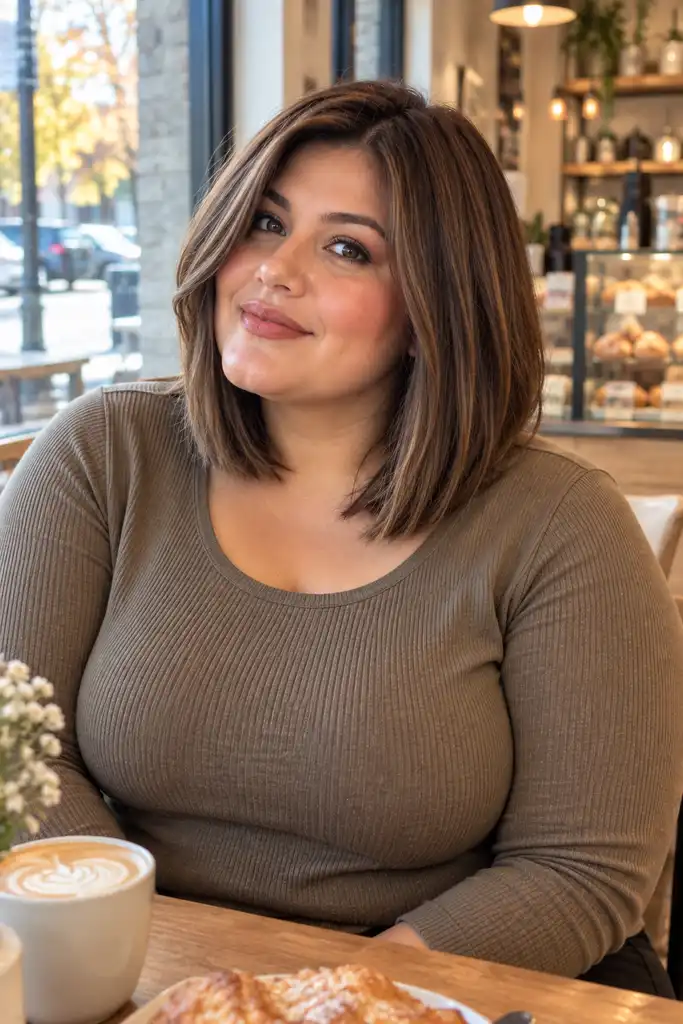
14. Wavy Long Layers
Long layers paired with natural waves create movement that travels downward rather than outward. That distinction matters when styling a round face because uncontrolled volume at cheek level can make the face appear broader. The ideal cut allows the waves to begin around the jaw or lower, creating a soft cascading effect. If your hair is naturally wavy, ask your stylist to work with your actual texture rather than cutting entirely from a straight-hair blueprint.
A lightweight curl cream can enhance definition without weighing the hair down. Avoid heavy products at the roots because excessive root volume combined with cheek-level fullness can make the overall silhouette appear wider.
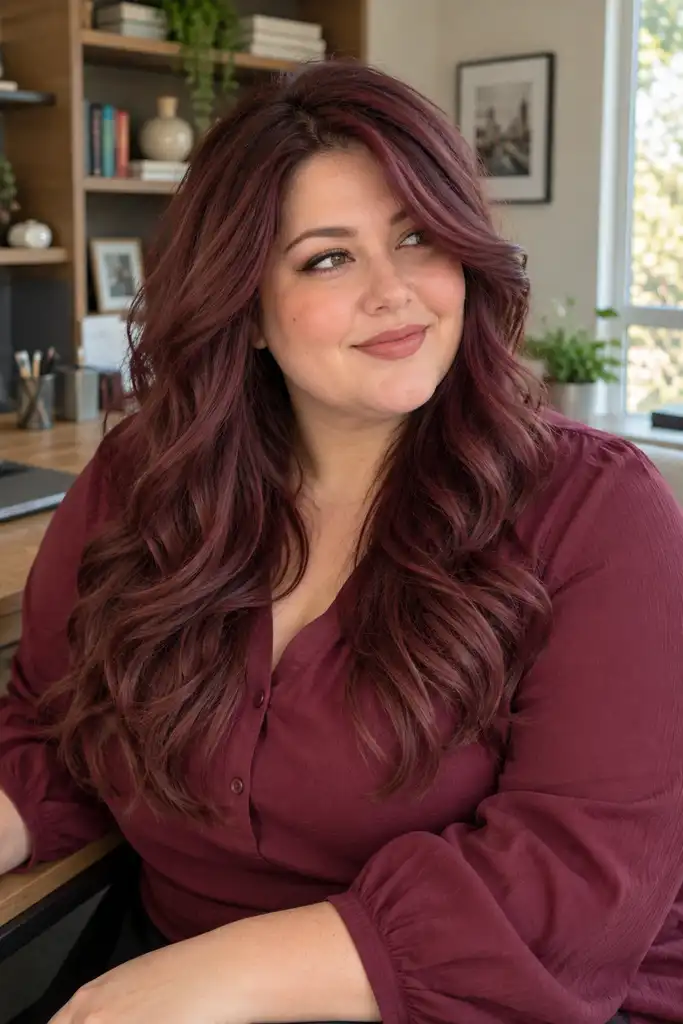
15. Layered Lob with Side Part
A layered lob becomes even more flattering for a round face when paired with a moderate or deep side part. The part introduces asymmetry at the top while the layers guide the eye downward. The collarbone length gives the haircut enough visual weight to balance fuller facial features without making the style feel bulky.
This cut suits straight, wavy, and lightly curly textures. Fine hair often benefits from fewer layers so the ends remain full, while thick hair can handle additional internal layering.
It is also easy to transform from casual daytime hair into a polished evening style with nothing more than a smoother blow-dry and a little shine product.
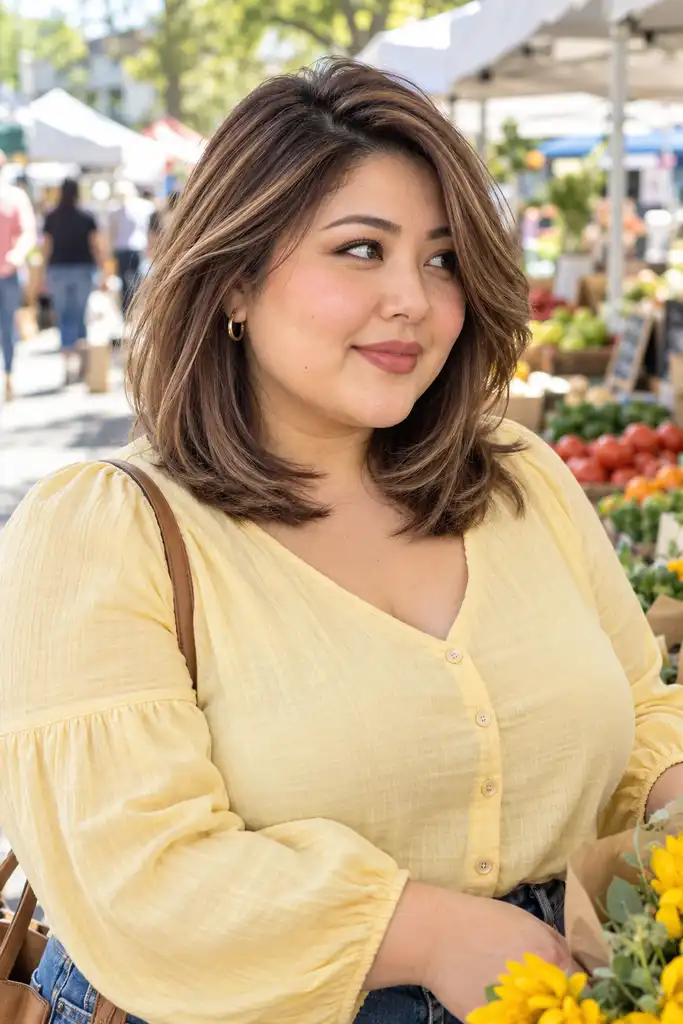
16. Tapered Pixie with Volume
A tapered pixie creates a clean outline around the sides and back while leaving more length on top. That longer top section is what gives the haircut its versatility for a round face. Instead of creating horizontal fullness at the sides, you can style the top upward, diagonally, or slightly backward to add height.
This style is particularly suitable if you prefer short styling sessions but do not mind regular salon appointments. The neckline and side shape can lose definition relatively quickly as the hair grows.
A lightweight styling paste is usually enough to create texture without making the hair stiff.
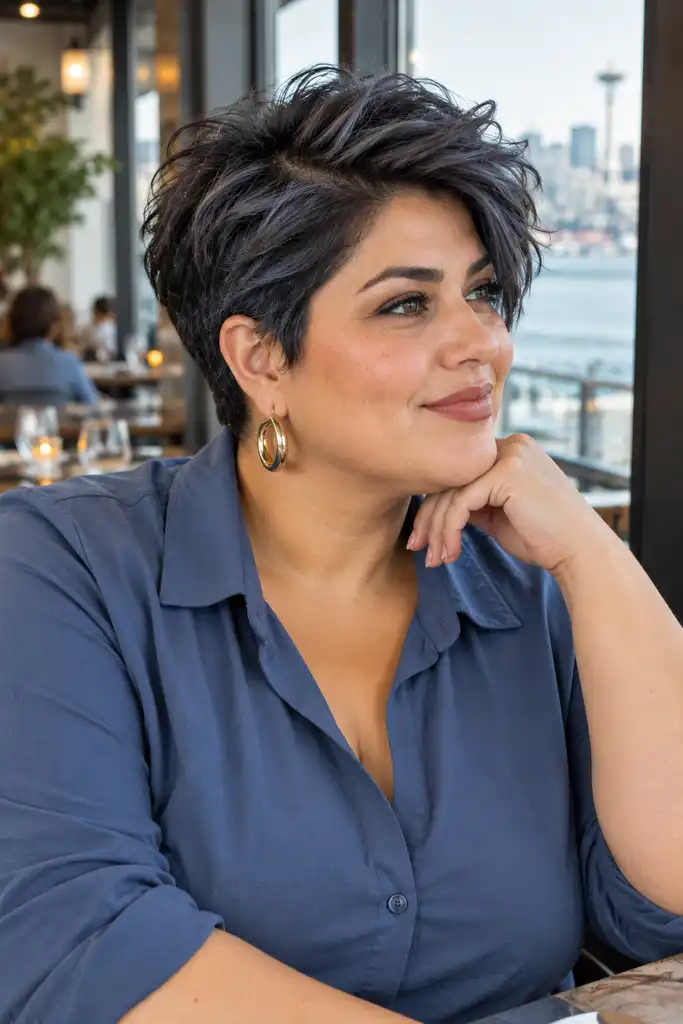
17. Layered Haircut with Wispy Bangs
Wispy bangs offer a softer alternative to thick, blunt fringe. Because they allow some forehead to remain visible, they avoid creating the strong horizontal line associated with heavier bangs. When paired with longer layers, wispy fringe creates a delicate transition from the forehead into the rest of the haircut. It is especially pretty with slightly tousled or softly waved hair.
One mistake is cutting the bangs too densely, which removes the lightness that makes them appealing. Another is making them too short. Longer wispy pieces usually blend more naturally into a round-face haircut.
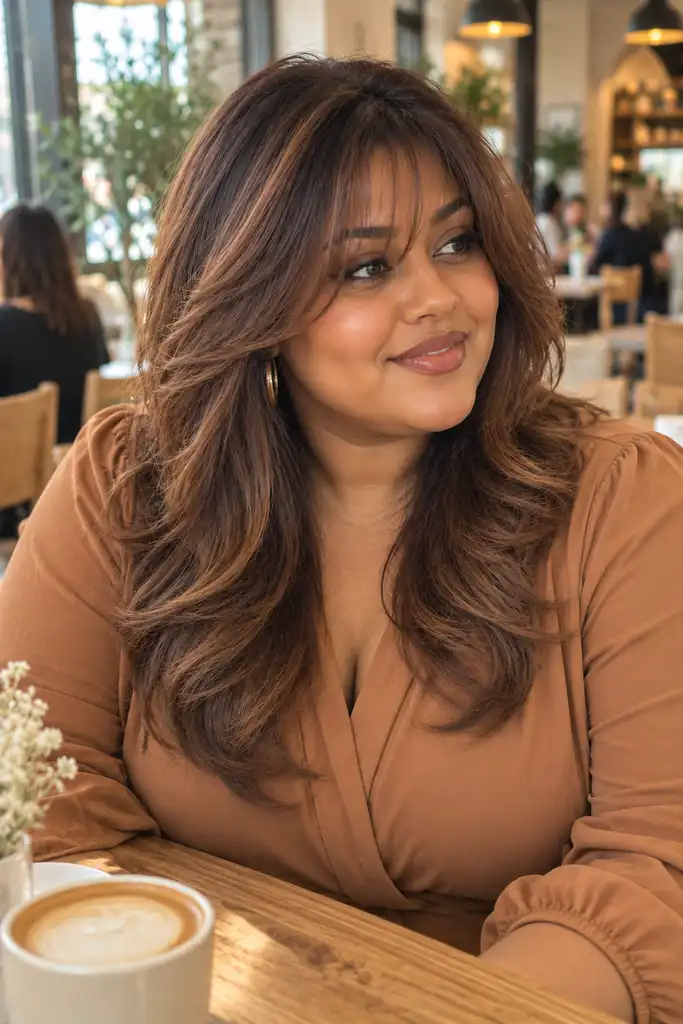
18. Long Side-Parted Layers
A side-parted layered haircut combines asymmetry with vertical movement. The side part shifts visual focus away from the center of the face, while long layers create length through the overall silhouette. The style works beautifully on straight hair but can also accommodate loose waves and curls. If your hair is thick, enough layering can prevent the lower lengths from becoming excessively heavy.
The best part is that the cut does not require elaborate styling to work. Even a simple blow-dry with the front pieces swept to one side can create a more balanced appearance.
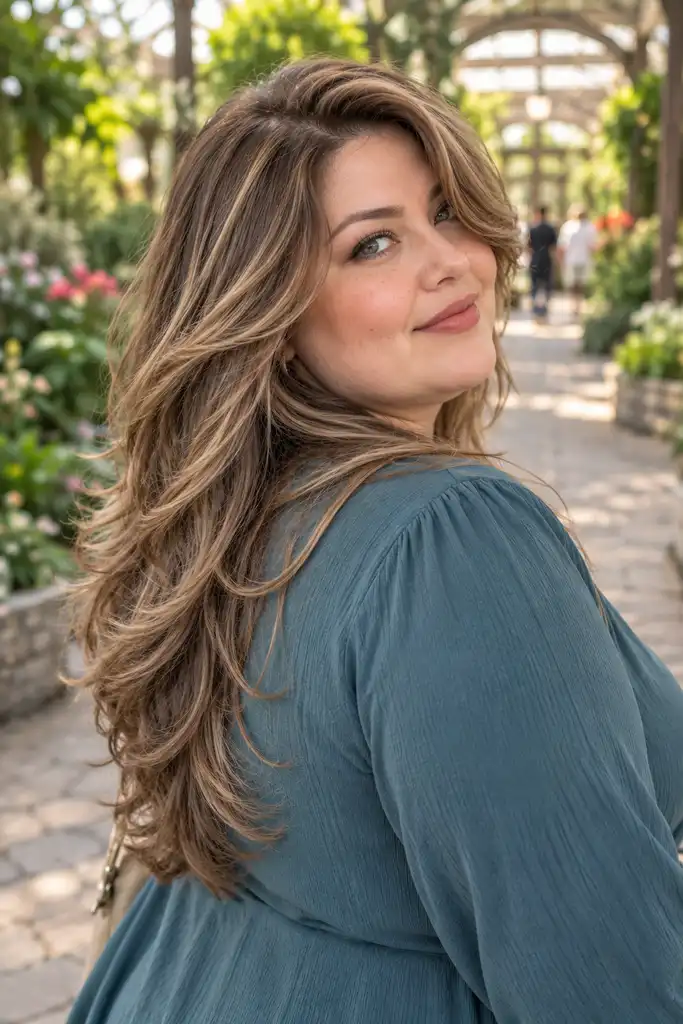
19. Soft Layered Shag
A soft layered shag gives you texture without the deliberately messy appearance of a heavily chopped shag. Layers can be concentrated through the crown and mid-lengths while longer pieces remain around the face. This creates movement while keeping the overall silhouette controlled. It is especially effective on naturally wavy hair because the cut can work with the texture instead of fighting it.
Straight hair can also look fantastic with a little texturizing product. If you prefer a refined result, ask for blended layers and a softer fringe. For something edgier, the stylist can emphasize the piecey ends.
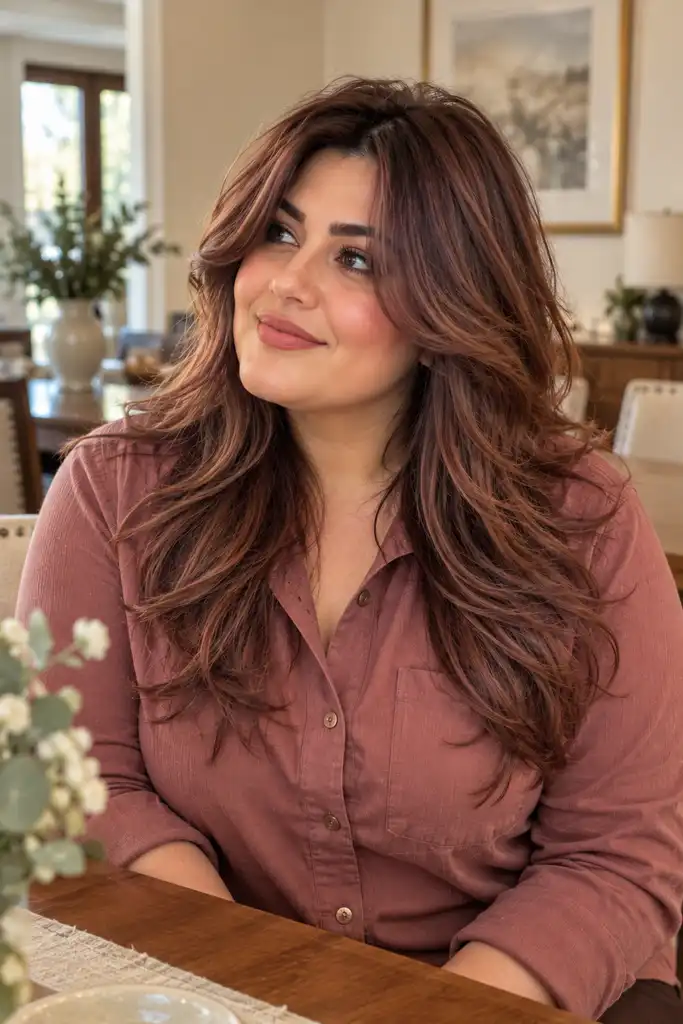
20. Sleek Long Bob with Angled Ends
A sleek long bob with angled ends is a polished option when you want something sophisticated without going extremely short. The length should ideally sit below the chin, with the front gradually extending toward the collarbone.
That angled perimeter gives the eye a diagonal pathway and prevents the haircut from creating a strong horizontal line across the widest part of the face. Straight hair shows off this shape particularly well, although a smooth blowout can create a similar effect on naturally wavy hair. Keep the styling sleek rather than excessively rounded at the sides.
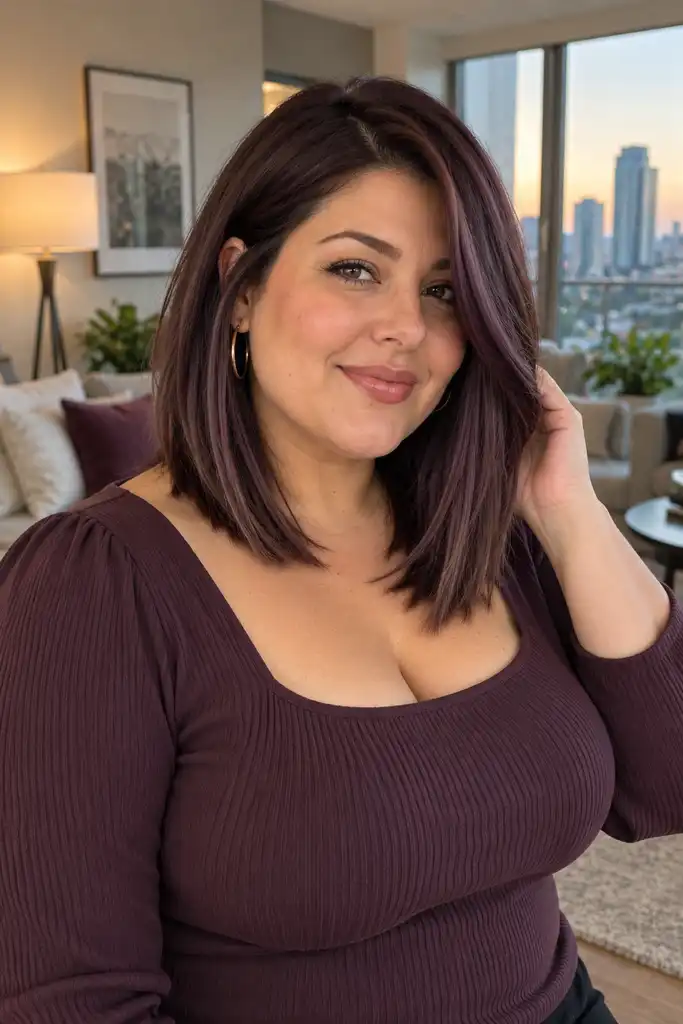
21. Long Layers with Curtain Fringe
Long layers with curtain fringe bring together several flattering elements for a round face: length, movement, softness, and strategic framing. The curtain fringe opens around the center while the longer pieces blend into the layers below. This creates a gradual transition rather than a sudden line across the forehead or cheeks.
The longer overall haircut provides plenty of vertical movement, while the layers prevent the style from feeling heavy. It is versatile enough to wear sleek, wavy, or with a fuller blowout.
For thick hair, carefully placed layers can make the lengths easier to style. For fine hair, fewer strategically positioned layers can create movement without sacrificing fullness. One of the most useful stylist tricks is to customize the curtain fringe to your natural part, because forcing the bangs against your natural growth pattern can make everyday styling unnecessarily difficult.
Frequently Asked Questions
What face-framing layers are most flattering for a round face?
Longer face-framing layers that begin below the cheekbones are often the most flattering. They create vertical movement without adding width at the fullest part of the face. Ask your stylist to blend the layers toward the jaw and below, adjusting the amount of layering to your hair density and texture.
Can a bob haircut make a round face look fuller?
Yes, depending on its length and shape. A bob that ends directly at the widest part of the cheeks can emphasize facial width, while an angled bob, collarbone lob, or longer blunt bob creates more length. A slightly longer front and an off-center or side part can add flattering asymmetry.
Which haircuts work best for thick hair and a round face?
Layered styles are particularly useful for thick hair because they can remove bulk while preserving length. Long face-framing layers, butterfly layers, soft shags, and layered lobs can all work well when the weight is strategically distributed. Ask your stylist about internal layering rather than excessively shortening the outer layers.
How should I choose bangs for a plus size woman with a round face?
Side-swept bangs and long curtain bangs are usually versatile choices because they introduce diagonal or vertical lines rather than a strong horizontal line. Longer, blended fringe also tends to grow out more gracefully. Your stylist should consider your natural part and hair texture so the bangs are easy to maintain.
Is a pixie cut flattering for a round face?
Yes, a pixie can look very flattering when it creates height and direction rather than fullness at the sides. Textured or tapered pixies with more length through the crown draw attention upward and can make the overall shape feel more balanced. Regular trims are important because short styles lose their intended silhouette quickly as they grow.
How can I make a layered haircut look slimmer around my cheeks?
Keep the shortest face-framing pieces below the widest part of your cheeks and avoid excessive volume directly beside the face. Styling the front pieces away from the cheeks can create a longer visual line. For naturally wavy or curly hair, lightweight products can enhance definition without encouraging bulky volume at cheek level.
What should I tell my hairstylist when asking for a flattering haircut?
Bring reference photos and explain which features you want the haircut to emphasize, rather than simply asking for a style that “slims” your face. Mention your hair texture, density, usual styling routine, and how much maintenance you are comfortable with. Ask the stylist to consider layer placement around your cheeks and jaw before cutting.
How often should I trim these haircuts to keep them looking polished?
The ideal schedule depends on the haircut. Pixies and strongly asymmetrical bobs usually need more frequent trims to preserve their shape, while long layered styles can go longer between appointments. Regardless of length, schedule a trim when the layers lose their movement or the ends become difficult to style rather than relying only on a fixed calendar.
Final Thoughts
The most flattering haircuts for plus size women with round faces are not about following a strict rulebook. Face shape is only one part of the equation, and your hair texture, density, lifestyle, preferred styling routine, and personal style all matter just as much. A longer layered cut may be perfect for someone who loves movement, while another woman may feel far more confident in a tapered pixie or structured lob. The real goal is to use shape and proportion to create a haircut that feels balanced and intentional.
When choosing your next cut, pay particular attention to where the layers, bangs, or perimeter fall around your cheeks and jaw. Face-framing pieces below the widest part of the face, diagonal lines, controlled crown volume, and longer front sections can all create beautiful movement. Most importantly, take inspiration from these ideas rather than treating any one haircut as a universal formula. The best haircut is the one that makes you look in the mirror and immediately feel like yourself—only fresher, more confident, and ready for your next hair day.